
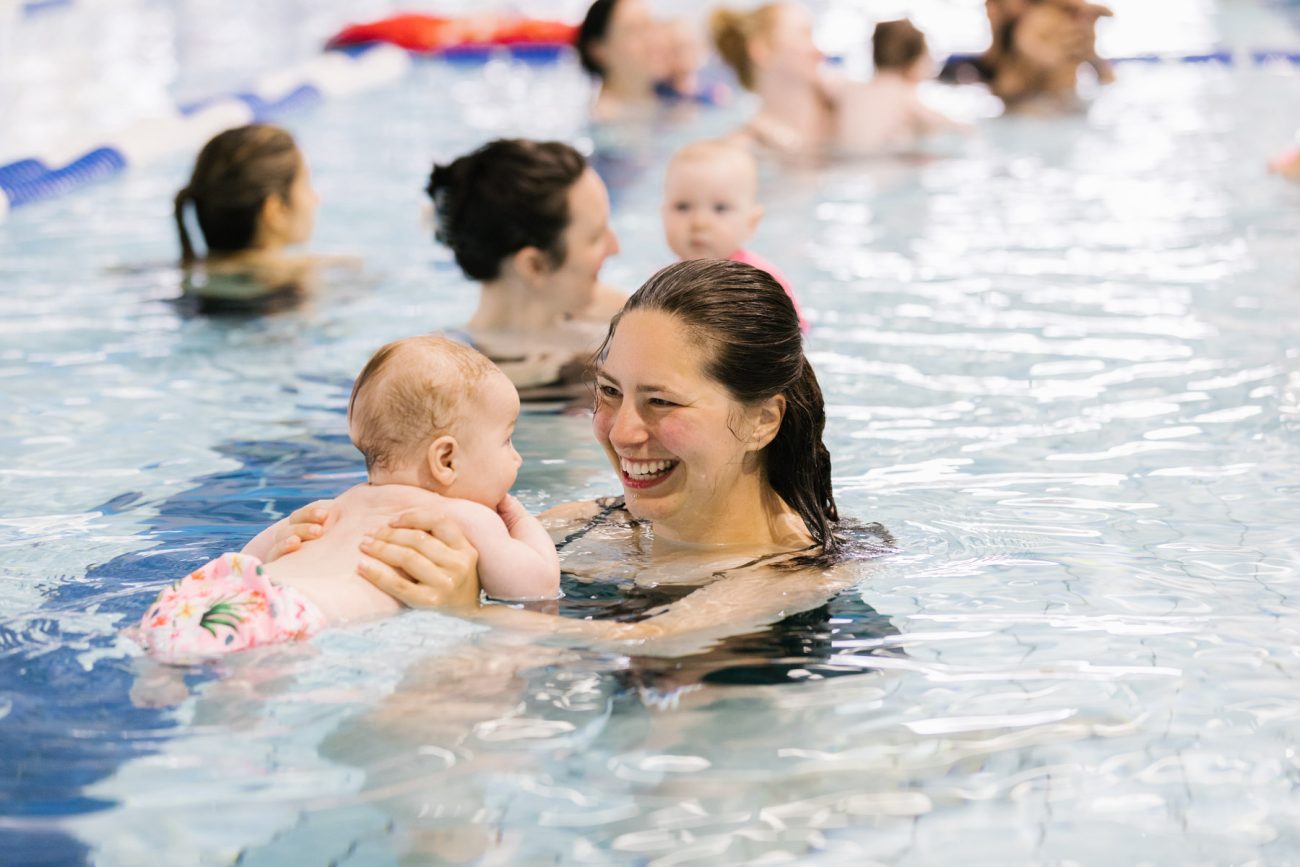
How early can babies start swimming lessons? For babies as young as 4 months, infant swimming lessons provide essential early experiences in the water. Enrolling your baby in a structured swim program like our Parent Child Program at a young age is not only a fantastic bonding experience but also a valuable opportunity to introduce water safety education early. These foundational experiences lay the groundwork for a lifelong swimming journey while supporting physical, cognitive and emotional development.
What’s the Best Age to Start Swimming Lessons?
Tragically, over 20 kids under five drown each year in Australia, often due to a lack of supervision or unrestricted access to water. With that sobering reality in mind, it’s no surprise that parents wondering when to start baby swim lessons are eager to grab a box of swim nappies and get their little one in the pool ASAP!
Most experts in Australia suggest children start swimming instruction at around 4 months old. When considering when is it safe for my baby to start swimming lessons, keep in mind that provided you’ve completed your baby’s 2-month immunisations, the risk of catching something nasty from another child is minimised. At this stage, babies are developing basic motor skills, and early exposure to water in a safe and playful environment can foster positive experiences that shape their confidence in the pool.
While infant and toddler programs begin teaching independence in the water, we advise parents that children under five should be within arm’s reach at all times; children under 10 should always be in your sight. These lessons help younger children become comfortable in the water, providing early exposure to swimming and water safety concepts, further laying the foundation for muscle memory that is used throughout future learn-to-swim lessons.
Regardless of when you start, swimming ability develops over time. Consistently sticking to a swimming lesson timetable, under the guidance of experienced instructors, ensures your child builds essential aquatic awareness and gains some positive experiences in the pool.
Start Swimming Lessons Early to Build a Strong Foundation
A 2012 study conducted by Griffith University found that children who participated in a learn-to-swim program before the age of 5 gained benefits beyond physical fitness. The research suggested swimming lessons help develop social, problem-solving, literacy and numeracy skills, reinforcing why early exposure to swimming and water safety is highly recommended.
Here’s how baby swimming lessons contribute to early childhood development:
Improving Physical and Motor Skills
Swimming lessons engage the entire body, building strength, coordination, balance and basic motor skills. Baby swimming lessons are an excellent complement to tummy time, helping infants build the muscle strength necessary to support their heads, move their limbs and develop core stability. This early development aids in reaching milestones such as sitting up and crawling.
Cognitive and Learning Advantages
Perhaps the most surprising finding of the study was that early efforts around learning to swim sets kids on a fast track for academic success. Griffith University’s research demonstrated that participation in infant and toddler classes positively impacts visual-motor skills, problem-solving, and even early literacy and numeracy. These early learning advantages contribute to long-term academic success.
Social and Emotional Growth
As a group activity, swimming lessons for babies provide a structured yet playful setting where infants interact with peers, take turns, and learn to follow instructions. Early engagement in a group dynamic also helps promote emotional resilience – think of the character-building potential of your little one learning to get over missing out on their favourite pool toy.
The struggle is real…ly cute.
Improved Appetite and Sleep
Turns out that when babies do more than eat and sleep, well, they eat and sleep more. Baby swimming classes – as short as half an hour – take a lot out of the little darlings. After a calorie-burning swim session you might find your baby has an increased appetite and sleeps more soundly. Music to the ears of parents with young babies we’re sure!
Essential Water Safety Awareness
Regardless of age, it’s never recommended children swim completely unsupervised.
Young infants and toddlers obviously require an adult close by whenever they’re in the pool. At Paul Sadler Swimland, we focus on water survival skills and basic aquatic locomotive skills, ensuring children gain the confidence and ability to respond in potentially sticky situations, and have the best chance of getting out of trouble if something goes wrong.
Signs You and your Child are ready for Swimming Lessons
Every family is different , but there are certain milestones to consider when asking, “‘How early can you start swimming lessons?” For babies, the following are positive indicators:
- Your child has received their 2-month immunisations.
- As a new mum you have healed from the birth and are cleared to go into the water.
- Your baby has a willingness to be held and guided in the water.
- You are comfortable taking your baby on other outings in public places.
If you and your little one show these signs, enrolling in a short weekly lesson with a parent-and-child approach is a wonderful way to start their aquatic education and deepen your bond.
What to Look For in Baby Swimming Lessons
It’s important that your baby’s early exposure to swimming is as stress-free and enjoyable as possible. Maybe your family has had a negative prior aquatic experience that has previously interrupted swimming lessons, making it even more critical to find a safe and playful environment for your child. Here are some things to look for:
- Parent-child lessons – Babies thrive when they have a parent or guardian there as a safety net. Structured yet engaging sessions with a baby- swimming/parent-encouraging approach work best.
- Care and comfort – Particularly in colder climates like Victoria’s, having a heated pool is a must. We recommend parents pack warm clothes for their baby to change into after their post-lesson shower.
- Gentle submersion techniques – We focus on creating a foundation for exploration and safety skills through floating, kicking and water play, building comfort so infants can get used to putting their heads under the water using our baby led techniques.
- Qualified instructors – At Paul Sadler Swimland, all our instructors complete over 200 hours of additional training before teaching their first lesson. Their expertise, combined with a genuine passion for working with young children, helps them recognise signs of discomfort or fatigue in infants. This allows them to adapt their teaching style to ensure each child feels safe, supported and confident in the water.
When should my baby start swimming lessons?
Why not today?! Enrolling your child in baby swimming lessons is one of the best ways to introduce them to water safety education, social interaction and early physical development. Swimming lessons members and their families gain confidence and skills they need to enjoy a lifelong relationship with water.
At Paul Sadler Swimland, we offer swimming lessons catering for all developmental stages, from foundation building to survival skills and stroke development. Whether you’re a parent or loved one who’s found this after searching for swimming lessons online, Paul Sadler Swimland will help guide your little bundle towards their best and brightest future in and out of the water with baby swimming lessons.
Get in touch to learn more about swimming lessons!